KingAgroot Receives Agricultural GMO Safety Certificates for Insect-Resistant, Flufenoximacil-Tolerant Soybean and Disease-Resistant Corn
Recently, KingAgroot CropScience’s independently developed insect-resistant and herbicide-tolerant soybean event KA-PM2208-8 and disease-resistant corn event KA-2D2001-3 have been officially granted Agricultural Genetically Modified Organism (GMO) Safety Certificates by China’s Ministry of Agriculture and Rural Affairs (MARA). The approval of these two innovative biotech events marks major breakthroughs in overcoming key technological bottlenecks in the industry, providing critical support for the independent development of soybean and corn biotech breeding in China.
Insect-Resistant, Flufenoximacil-Tolerant Soybean
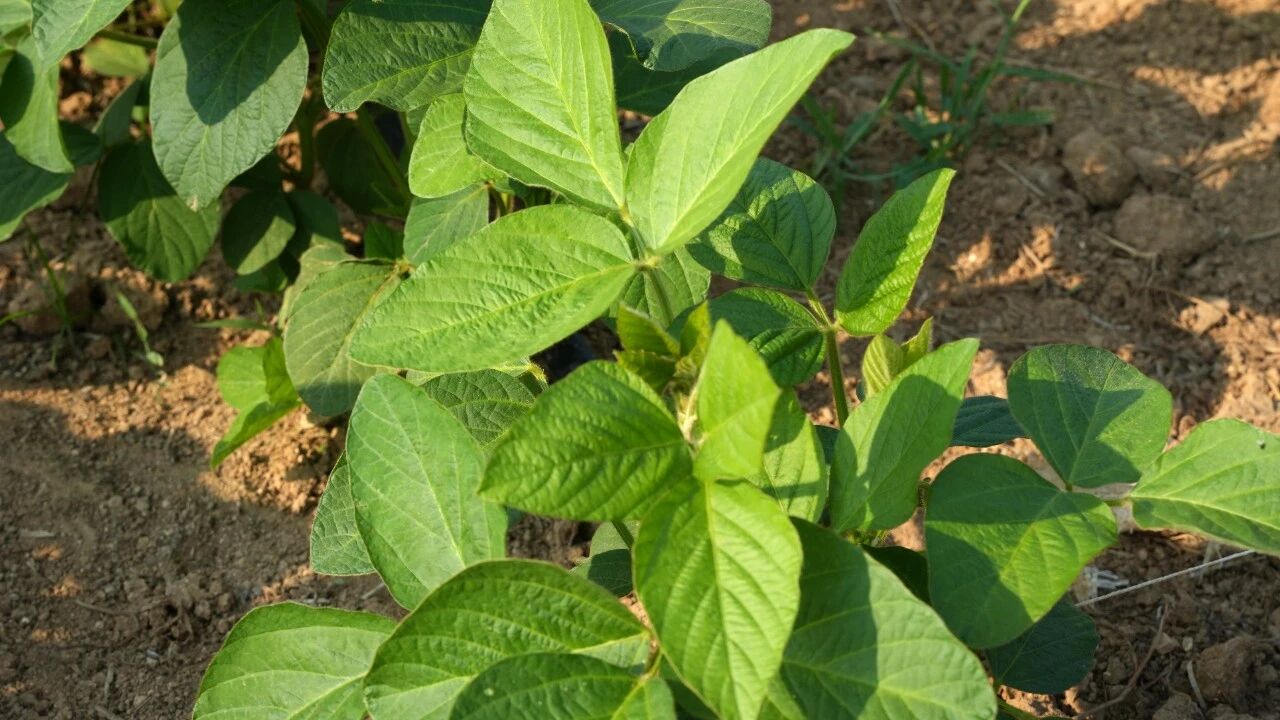
KingAgroot’s Insect-Resistant, Flufenoximacil-Tolerant Soybean
As glyphosate- and glufosinate-resistant weeds continue to spread globally, herbicide resistance has become increasingly severe in China’s major soybean-growing regions. Increasing weed resistance has led to rising weed management costs and significant yield losses, becoming a major challenge limiting the quality and efficiency of China’s soybean industry.
The newly approved soybean event KA-PM2208-8 incorporates KingAgroot’s proprietary multi-gene stacking technology. Using a single-vector transformation system, four functional genes were introduced simultaneously, including two core herbicide-tolerance genes — OsPPO2-k1 and PAT — and two broad-spectrum insect-resistance genes — Vip3Aa19 and Cry1Ac. Through the synergistic action of these four genes, the event delivers dual advantages: tolerance to two major herbicides and broad-spectrum insect resistance.
Two Core Herbicide-Tolerance Genes
OsPPO2-k1 is a proprietary herbicide-tolerance gene for which KingAgroot holds full independent intellectual property rights. It provides stable tolerance to PPO-inhibiting herbicides such as Flufenoximacil (FFO).
Flufenoximacil is KingAgroot’s next-generation proprietary PPO-inhibiting non-selective herbicide. Compared with conventional herbicides, it offers a broader weed control spectrum, faster action, higher efficacy, greater application flexibility, and improved environmental safety.
Meanwhile, the PAT gene confers tolerance to glufosinate and glufosinate-P. KingAgroot’s FFO-based herbicide products — Winspeed® (110 g/L FFO·glufosinate-P ME) and Speedo® (40 g/L FFO EC) — are well suited for these tolerant crops.
The approval of soybean event KA-PM2208-8 will help establish a fully integrated closed-loop solution combining proprietary seeds and proprietary herbicides.
Two Broad-Spectrum Insect-Resistance Genes
In addition to herbicide tolerance, the synergistic action of Vip3Aa19 and Cry1Ac provides highly effective control of major lepidopteran pests commonly found in soybean-growing regions, including soybean pod borer (Leguminivora glycinivorella), fall armyworm (Spodoptera frugiperda), beet armyworm (Spodoptera exigua), and cotton bollworm (Helicoverpa armigera).
The event enables integrated field protection combining herbicide tolerance and insect resistance, helping reduce labor requirements and pesticide applications while improving grower profitability and yield stability. It also provides strong proprietary innovation support for China’s soybean production capacity enhancement initiatives.
Notably, this event is among the soybean transformation events in China carrying the highest number of genes within a single vector, representing a major technological breakthrough in multi-gene stacking breeding.
Disease-Resistant Corn

KingAgroot’s Disease-Resistant Corn
Maize rough dwarf disease (MRDD) is a major viral disease in corn transmitted by the small brown planthopper (Laodelphax striatellus). It has historically caused severe damage in China's Huang-Huai early-sowing corn regions. Although the widespread use of neonicotinoid seed coating products has helped suppress disease incidence, growing resistance of Laodelphax striatellus to neonicotinoid insecticides could make MRDD an increasingly critical threat to future corn yield improvement. Yield losses in infected fields commonly reach 20–30%, while severely affected fields may suffer complete crop failure. Currently, no highly effective chemical control solution is available.
KA-2D2001-3 is the world’s first RNAi-engineered virus-resistant corn event to obtain agricultural GMO safety certificate. The event provides immunity against the virus, filling a major technological gap in the field. It offers a green and highly effective solution for corn disease management, helping secure stable yields and income growth in major production regions.
In recent years, KingAgroot has consistently pursued a dual-driven strategy integrating agrochemical innovation and biotech breeding. In 2025, the company was officially approved to establish the Key Laboratory of Biotech Breeding and New Variety Development under China’s Ministry of Agriculture and Rural Affairs (MARA). KingAgroot has now built a comprehensive and uniquely competitive integrated innovation platform combining agrochemical innovation and biotech breeding.
The approval of these two transformation events represents a major milestone in the implementation of KingAgroot’s dual-driven strategy. It also provides a new model for achieving independent innovation in core functional genes and key breeding technologies in China’s biotech breeding sector.
To date, KingAgroot has obtained a total of five agricultural GMO safety certificates. Its growing portfolio of innovations will continue accelerating the industrialization of biotech breeding in China while strengthening national food and edible oil security through proprietary technological innovation.